Friday, December 13, 2013

The Red Guide to Recovery by Sean Scott

Disaster recovery grows in importance every year.   Access to information by victims and those who care for them is more important than ever.  The Red Guide to Recovery is a primer, a "book of proverbs" if you will,  to address the need. 


The Red Guide to Recovery
 
I bought it because it was marketed to the fire service and it is of value, especially in a large scale event.  However, it would be a better course to homeowners than a fire ground resource.  As a small town pastor and fire chaplain, I do very little follow up with survivors and almost no community education. An Emergency Manager might be a better target.

 I spent several years working hurricanes and much of this is old hat.  Those in the fire service could easily assume that everyone knows these things.  Folks that have not been through a disaster need this good and basic stuff.   For example-DON'T run a generator inside the house and DON'T turn off the breakers while standing in a puddle.  People die every disaster over these types of things.
 
This is a multi media resource and does a good, comprehensive job with an extremely broad subject.  Anchored in a book, e-book and app, the author links back to his website, http://www.theredguidetorecovery.com/ . This information changes with the whims of the many resources and the site can change where the book cannot.

As it is self published and self marketed by the author, Sean Scott, the book can also be customized for a specific community with local QR's and local resources.  The app could be easily revised later but the hard copy could be obsolete pretty quickly.   This is would make an excellent mitigation/preparation class and supported with the author's "Free Tools" from the website. 

The Red Guide is more focused with larger disasters more than a local house fire but the subjects are relevant to both.  Half of the book is dedicated to handling contractors and insurance issues.  Much is a guide through the tangle of the FEMA web materials which the author does well.  The author does an excellent job of dealing with  disaster scams and pets. Chapter 13, Trauma Intervention and Grief Counseling, is well done, especially with children's issues but does not address the role of faith in recovery. 

The Red Guide is not quite a text book but more than just a field guide.  It is well organized, clearly written but not something you look through on the fire ground. The forward is a more thorough overview than most books like this and each chapter begins with learning goals in bullet point-this makes it easier to navigate. 

Any responder or survivor who reads this will be better equipped for the disaster at hand. I recommend it as an addition to all stress/emotional first aid resources.  Once the situation is calmed, this guide gives you a confident next step. 

Friday, November 22, 2013

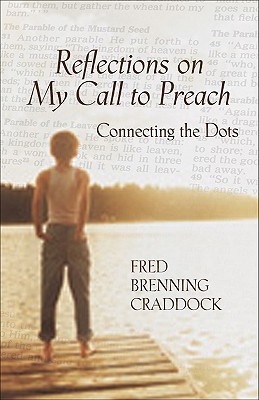
Connecting the Dots: Fred Craddock Shares his Journey into the Ministry

Reflections on My Call to Preach: Connecting the DotsI am a preacher and live in a world where I share my calling with a lot of wonderful people who don't really understand what that calling is.  The biggest reason for the lack of understanding is that the call of God to preach defies words.  Fred Craddock share the intimate journey from being a little Tennessee boy to one of the greatest and best known preachers of our age.

Craddock's book "Preaching" was required reading in seminary and rightfully so.  It is an in depth look at the process of discerning and creating the oral event that we call a sermon.  "Reflections" goes behind the scenes of the sermon and looks for those "dots" or "final proofs" that affirm this calling is of God and not just a personal decision.  I won't spoil his discovery but will offer this tease.  Quoting Franz Werfel, " (to ) the one who wills to believe, final proof is not necessary.  To the one who will not believe, final proof is never enough." 

This is not a book of chicken-soupy anecdotes but a journey of discovery of how Fred Craddock the preacher came to be.  It is also a witness for us all to the power of an honest memoir for self-discovery.  If you are a preacher is can help you put words to your journey.  If you are not, it may help you understand the strange motivation of those  preachers who are under your care.

A great read from a great writer. 

Thursday, August 8, 2013

Book Review: In the Pit with a Lion on a Snowy Day-The Risk of Playing it Safe

Mark Batterson has taken an obscure story from 2 Samuel 23 and written a commentary on one of the most important issues for Christians and indeed in our world, “Living in Crippling  fear.”  So many writers are busy trying to prove relevance or put a new spin on old answers.  Batterson takes the story of Benaiah and issues us a strategy to fearlessly live life as a faith led adventure. 


Many people are paralyzed by fear.  This book is an answer to the dissatisfaction and tension that many live in by redeeming that fear into un-stuckness.   “In a Pit” points to Jesus as the ultimate risk taker and reward bearer.  Rather than being stuck, we are freed through the process of looking to scripture, reframing fear, adversity, prayer into spiritual growth opportunities and not punishment.  We do not have to be stuck in the fear of feeling foolish. The author’s treatment of “divergent” thinking is brilliant.  Children and new Christians-who haven’t met a theologian yet- are born to think “out of the box.  Fear traps us within that box.
 Book Cover Batterson’s calls the reader  to  grow and mature by living the adventure of Christ, “tapping into our natural weirdness” and recognizing that God does not meet anyone in the Bible through “normal’ means.  Besides, “normality is overrated” and maturity is often mistakes as conformity.
Batterson’s style is fresh and efficient.  The text is a mere 171 pages and every word counts.  There are an abundance of sound- bites that ring in my ears.  “In a Pit” is flexible in design.  It can be read devotionally either by a chapter a day or in about two sittings or in a small group by using the chapter reviews and end notes.
 The chapter reviews have discussion “points to remember” and a sensible “Starting Your Chase” suggestion that prompt the reader to action.  The goal of this book is not merely telling you to quit being afraid.  Batterson gives uniquely Christ-centered reasons and spirit led ways to take the first step.  An excellent read.
Thanks to Multnomah press and the author for giving me this book in exchange for writing this review. 
Thus ends the review but begins my personal thoughts generated by this reading.  So many people will not read a book before reading comments and gathering rating information.  Many will not watch a film or listen to music that they know nothing about.  The Christian life, our country and our personal satisfaction comes from discovery and not certainty.  Are people losing their taste for risk?
Fear is crippling so many people.  Unresolved it becomes boredom or even depression.  Reframing fear into a motivation and not a stumbling block is Mark Batterson’s thesis and fearlessness is Christ’s gift to us through salvation.  Christ is not calling us to reckless or random action but walking by “Faith and not by sight”.  Scripture offers a touchstone for our decision making; prayer offers a walking connection to Christ and the church a safe place to train for the journey. 
The call to the church is to be a place of adventure and a sponsor of those jumping into the disciple’s life.  Membership is not enough and study is not the goal.  Finding our way as we go is so satisfying.  Ambiguity is difficult for some but faith in Christ can actually cause the disciple to crave it rather than mistaking it as dangerous. 
  This past weekend I heard a story from a colleague about his personal passion to minister to homeless people in the Tyler Texas area.  This is how his adventuring works; He will see a homeless person, lock his kids in the car, determine them to be safe, and then motion his family to join them.  He will give snacks, meal coupons, and pray for that person.  While driving around with his pre-school daughter, she screamed, “Daddy stop” as she saw a homeless man that she recognized.  Her pastor-dad told her no, they were in a hurry to get somewhere else.  The little girl stuck to her calling and insisted loudly that they stop.  He did stop-and all were blessed-the man, the daughter, and the dad.  This is normality at their house.
This is the life that Mark Batterson is describing.  This is adventure in Christ.  This is how a little girl changes the world…..starting with us boring normal guys.


Thursday, August 1, 2013

Ambrose Bierce: a writer satires his tools

In Heaven there is a Half Price Books store.  I can't prove that in scripture and it isn't really my desire for an ultimate destination. 

As I vacation, however,  I would happily put a cot and my tooth brush here and stay a while.  You don't go to used book stores looking for anything specific.  They are a place of discovery and require huge blocks of time. Where else can you get two hours of entertainment for four buck though?   I have come to see what can be seen.  Here is my find for the day. 

Ambrose Bierce's "The Devil's Dictionary.  Bierce was a witty curmudgeon and a man of words.  A veteran of the civil war, he died in 1914.  This book was originally printed in 1911 and   reprinted from his complete works on its 100th birthday, 2011. (Dover Publications, New York, USA)

Ambrose Bierce was a humorist, journalist, author and professional cynic.  He  made fun of things and his definitions appeared in newspapers from the late 1899's through early 1900's. This book makes fun of dictionaries.  His definition of a dictionary?:  "n. a malevolent literary device for cramping the growth of language and making it hard and inelastic.  This dictionary, however is a most useful work." So there. 

He describes a minister as, "an agent of a higher power with a lower responsibility", diplomacy as "the patriotic art of lying for one's country",  a hearse as "death's baby carriage.", and a lawyer as "one skilled in circumvention of the law."  There are hundreds  upon hundreds of these clever and often caustic "definitions". 

Want a copy of your own?  Amazon has a download for two bucks or hard copies in several covers.  Abebooks, halfdotcom or one of the other used book sites would have them too.

But wait a minute.  The gift of this book is not that I own it but rather that I discovered it.  Authors pour out words that score emotion, transformation and art.  How will we rediscover the works of the past without used book stores?  Will the search for a reading gem be reduced to reading ads from Amazon or Barnes and Noble?

 You can't dig through a resale shop for a download.  They don't get dog-eared or get sold for a quarter with a love note or piece of junk mail used as a bookmark. Digital copies can be shared but carry no marginal notes or other marks of the person that read the book.  Yes, I reluctantly got a Kindle last year and love it but it has no soul.   Technology provides for a way to warehouse every work we create but does create the longing to rediscover.  Books bear our essence as people as much as its own message

There is a French saying, "A recherche du temps perdu".  It translates, a (re)discovery of lost time.  It describes that powerful memory of a past event that floods our being when we touch something or someone from our past. The touch of a book creates a story, sometimes from the author and sometimes from the owner.

Ever touch your grandmother's Bible or the bulletin from a funeral and have that rush of memories?   I pray you have that "recherché" today in some way or another. Old books are a means of Grace.  I pray that our quest for technology doesn't take that desire to discover things that we don't know exist.  This is the way Christian Spirituality works too.  It is the journey into the not-knowing that gets us where God wants us to be.

Want a copy of "the Devil's Dictionary"?  Dig for I!.  With any luck you won't find it but will discover something far greater, something left on a shelf or in a paper sack at a garage sale just for you.

Ambrose Bierce gets the final word....

"Review, v.t.
To set your wisdom (holding not a doubt of it,
Although in truth there's neither bone nor skin to it)
At  work upon a book, and so read out of it
The qualities that you have first read into it.
 
 
Another book with many of Bierce's quotes in "The Portable Curmudgeon" edited by John Winkour.